- "Resetting your nervous system" really means helping your body move from a stressed, fight-or-flight state into a calmer rest-and-digest one.
- Slow breathing, gentle movement, good sleep, less caffeine, and time with other people are simple ways to help your body settle.
- Mad honey nudges part of the rest response, which is why people commonly report feeling calm.
- Mad honey isn't suitable for everyone, especially people with a slow heart rate, low blood pressure, or medication that affects the nervous system.
Scroll through wellness videos for a few minutes, and you'll probably come across the idea of "resetting your nervous system". It's promised as the answer to stress, burnout, poor sleep, and that wired-but-tired feeling so many people know. The suggested fixes range from breathing exercises and humming to ice baths and shaking your body out.
But what does resetting your nervous system actually mean, and does any of it work? This guide explains the idea in plain terms, from the difference between "fight or flight" and "rest and digest" to the everyday habits that genuinely help your body calm down. It also takes an honest look at mad honey, which people often describe as calming, and explains why it affects part of the rest response.
Can You Reset Your Nervous System?
Not in a literal sense. No switch wipes your nervous system back to a clean slate. When people talk about resetting the nervous system, they usually mean helping the body move out of a stressed "fight or flight" state and into a calmer "rest and digest" one. Everyday habits like slow breathing, gentle movement, good sleep, and time with people you trust can help with that, especially when you keep them up over time. Mad honey is commonly reported to feel calming in small amounts, but it works by nudging part of the rest response chemically.
What People Mean by "Resetting the Nervous System"
The phrase has spread mainly through social media, wellness podcasts, and online courses. Much of it draws on ideas about the vagus nerve, a long nerve that runs from the brain down through the chest and abdomen and plays a big part in calming the body. Some of these ideas come from popular theories that are still debated by scientists, and some claims online go well beyond the evidence.
At its core, though, the idea is simple and reasonable. Modern life keeps many people in a low-level state of stress: busy jobs, constant notifications, poor sleep, and too much caffeine. Over time, the body can get stuck in that "on" mode. A "reset" describes the process of helping it switch back to "off" more easily.
Fight or Flight vs Rest and Digest
Your nervous system has a part that works automatically, without you thinking about it. It's called the autonomic nervous system, and it has two main branches that work like an accelerator and a brake.
The Stress Response
The sympathetic nervous system is the accelerator. When you face a threat, real or imagined, it prepares your body to act. Your heart beats faster, your breathing quickens, your muscles tense, and digestion slows down. This is the "fight or flight" response, and it's useful in short bursts, like when you need to react quickly or perform under pressure.
Problems start when it switches on too often or stays on for too long. A stressful commute, a difficult inbox, and a late-night scroll can all keep the accelerator pressed, even when there's no real danger.
The Rest-and-Digest Response
The parasympathetic nervous system is the brake. It helps your body recover, slow down, and look after itself. Your heart rate slows, your breathing deepens, your muscles relax, and digestion gets going again. This is often called "rest and digest".
The vagus nerve is the main pathway for this calming side. When it's active, it sends signals that slow the heart and settle the body. Many "reset" techniques aim to encourage this response.
Everyday Ways to Help Your Nervous System Settle
You can't control your nervous system directly, but you can influence it. These everyday habits are some of the simplest ways to help your body shift towards rest and digest.
Breathe Out for Longer Than You Breathe In
Slow breathing is one of the most direct ways to calm your body, because breathing is one of the few automatic processes you can also control. A long, slow out-breath in particular encourages the rest response.
Try breathing in gently through your nose for a count of four, then out slowly through your mouth for a count of six or eight. Keep going for a few minutes. Many people notice their shoulders drop and their heartbeat settle. It's easy to do anywhere, from your desk to a crowded train.
Cool Water on Your Face
Splashing cold water on your face or holding a cool, damp cloth against it for a few seconds triggers the dive reflex. It's a natural response that slows the heart and can help you feel calmer quickly.
Hum, Sing, or Talk Slowly
Humming, singing, and slow, steady speech all lengthen your out-breath, and they use muscles in the throat close to the vagus nerve. Many people find a few minutes of humming or singing along to the radio a surprisingly easy way to unwind. It won't fix stress on its own, but it's free and quick.
Move, Then Rest
Physical activity uses up some of the energy the stress response creates. A brisk walk, a swim, a bike ride, or a yoga class can help your body work through tension, and the relaxed feeling afterwards is part of the rest response kicking in. Gentle stretching or a slow walk in the evening is enough on busy days.
Sleep and Daylight
Your nervous system relies on good sleep to recover. A regular bedtime, a dark and cool bedroom, and time away from screens before bed all help. Getting daylight in the morning, even on a grey day, helps set your body clock, which makes it easier to feel alert during the day and wind down at night. If you have trouble falling asleep, you can look into some natural sleep aids.
Cut Back on Caffeine
Caffeine stimulates the stress side of the nervous system, which is why too much can leave you jittery and on edge. Between builder's tea, coffee, and energy drinks, it's easy to have more than you realise. Try switching to decaf or caffeine-free drinks after lunch, and notice whether your evenings feel calmer.
Spend Time With People
Feeling safe and connected is one of the most powerful signals to your nervous system that it can relax. A chat with a friend, a hug, a walk with someone, or simply laughing together can all help your body settle. If stress or anxiety is affecting your daily life, talking to your GP is a good next step.
Build an Evening Wind-Down Ritual
Your nervous system responds well to cues it can recognise. A short ritual you repeat most evenings tells your body the busy part of the day is over and it's safe to slow down. Over time, simply starting the ritual can help you feel calmer, because your body learns what comes next.
It doesn't need to be elaborate. Pick two or three things you enjoy and do them in the same order, at roughly the same time:
- dim the lights and put your phone on charge in another room
- make a warm, caffeine-free drink, like chamomile or rooibos
- spend a few minutes on slow breathing, gentle stretching, or reading
- take a warm bath or shower
The key is consistency, not perfection. Even 15 minutes of the same calming steps each night gives your body a regular, predictable chance to shift into rest and digest. It's also a natural place for small, occasional treats that help you unwind, which is where some people choose to include mad honey.
Can Mad Honey Help Reset Your Nervous System?
Mad honey often comes up in conversations about calming the nervous system, so it deserves an honest answer.
How Mad Honey Affects the Rest Response
Mad honey is a dark, raw honey from the Himalayan foothills of Nepal, made by giant honey bees that forage on wild rhododendrons. It contains naturally occurring grayanotoxins from rhododendron nectar. These compounds act on the nervous system and stimulate the vagus nerve, the same pathway behind the rest-and-digest response.
That's why, in small amounts, people commonly report feeling calm, warm, and slightly light-headed, with a slower, more mellow pace. Mad honey effects are usually said to start within about an hour and fade over a few hours, though they vary with the honey, the amount, and the person.
Does Mad Honey Reset Your Nervous System?
Feeling calmer for an evening isn't the same as resetting your nervous system. Mad honey gives a short-lived chemical nudge to one part of the rest response. It doesn't teach your body to handle stress better, and it doesn't build the kind of resilience that comes from habits like slow breathing, regular movement, and good sleep.
There's also an important catch. Because grayanotoxins push the rest response directly, taking too much can trigger unpleasant effects. Instead of feeling relaxed, people can end up with a very slow heart rate, low blood pressure, dizziness, nausea, and fainting. So don’t ever take more honey to chase an even calmer feeling. The opposite might happen. To avoid risks, stick to the dosage guidance.
If you choose to include mad honey as part of your habits to regulate the nervous system, treat it as an occasional helpful experience that shouldn't replace any of the everyday practices above, professional support, or medication your doctor has prescribed.
Who Shouldn't Take Mad Honey
Because grayanotoxins act on the same system that slows the heart and lowers blood pressure, some people should avoid it altogether. Don't take mad honey if you:
- have a heart condition or low blood pressure
- take medication that affects your heart rate, blood pressure, or nervous system
- are pregnant or breastfeeding
- are under 18
People who already have a naturally slow heart rate or who feel faint easily should be especially careful. If you have any other health condition or take regular medication, talk to your doctor before trying mad honey.
If you feel unwell after taking mad honey, call NHS 111 for advice. If symptoms are severe, such as fainting, chest pain, or a very slow heartbeat, call an ambulance and tell them what you've taken and how much.
How to Buy Mad Honey You Can Trust
The amount of grayanotoxin in mad honey isn't fixed. It changes with the rhododendron species the bees visited, the altitude of the cliffs, the season, and even the weather in a given year. Two jars that look the same can contain different amounts of grayanotoxins, which means the same spoonful can feel different from one batch to the next.
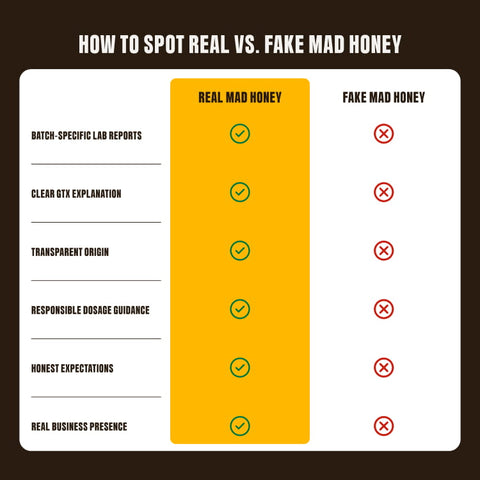
That's why lab testing is so useful. A lab report measures the grayanotoxin content of a specific batch, so you know what you're buying before you open the jar. It isn't a guarantee of how you'll feel, but it takes a lot of the guesswork out. Without one, you have no way of knowing whether a jar is mild, unusually strong, or not genuine mad honey at all.
A reliable seller should be open about a few things:
- Where the honey comes from: Look for a named region of Nepal and information about the honey hunters who harvest it.
- How each batch is tested: The seller should publish a lab report for each batch, showing its grayanotoxin content, and make it easy to find the report that applies to your order.
- Who shouldn't take it: Clear guidance on restrictions and how much to start with is a good sign that the seller takes it seriously.
Be wary of unlabelled jars, sellers who make big promises about what mad honey can do, or honey sold without any information about its origin or testing.
At Real Mad Honey, each batch is tested by a laboratory to measure its grayanotoxin content, and you can look up the lab report online.
Enjoying Mad Honey as Part of an Evening Wind-Down Ritual
If you're suitable to take mad honey and would like to try it, the evening wind-down ritual is the natural place for it. Here are some tips:
- Stay at home: Take it on an evening or at the weekend with nothing else planned, and don't drive afterwards.
- Start small: Follow the guidance on the jar and our dosage guide, and measure a level amount on a small teaspoon.
- Pair mad honey with other calming habits: A few minutes of slow breathing or a warm bath fits well alongside it.
- Try it in tea: Stir mad honey into a caffeine-free tea once it's cooled below 40 °C.
- Skip the alcohol: Never combine mad honey with alcoholic drinks.
- Check the batch: Check the lab report for your jar’s grayanotoxin content.

Final Thoughts
Resetting your nervous system isn't about a single trick. It's about giving your body regular chances to move from stress into rest. Slow breathing, a splash of cool water, humming, gentle movement, good sleep, less caffeine, and time with people you care about all help, and they work best when they become part of your everyday routine.
Mad honey acts on part of that rest response, which is why many people find it calming in small amounts. But it's a short-lived nudge, not a reset, and it isn't right for everyone. If you're suitable to take it, pick a trustworthy seller, enjoy it at home as an occasional part of a calm evening, start small, and let the everyday habits do the rest of the work.