- Honey rarely goes off because its low water content and natural acidity stop most microbes, so a sealed jar in a cool, dry cupboard can stay safe for years.
- The best-before date on a jar of honey is about quality, not safety, so a well-stored jar past its date may just be darker, less fragrant, or set.
- Honey only really spoils when it takes in water, which lets natural yeasts start to ferment it.
- Crystallised honey is still perfectly good to eat, and it sets fastest in a cool kitchen or with high-glucose honeys like rapeseed.
Most kitchens have one: a jar of honey at the back of the cupboard, half used, a little sticky around the lid, and well past the date printed on the label. Maybe it's turned solid or gone a shade darker than you remember. So does honey go off, or is that old jar still fine to spread on your toast?
Luckily, honey is one of the longest-lasting foods you can keep. This guide explains why honey keeps so well, what the best-before date really means, the one situation where honey genuinely does spoil, whether it belongs in the cupboard or the fridge, and more.
We'll also look at how all of this applies to mad honey, the dark, raw honey from the cliffs of Nepal, which keeps just as well as everyday honey but has a few habits of its own.
Does Honey Go Off?
Honey very rarely goes off. Because it contains very little water and is naturally acidic, most bacteria, yeasts, and moulds can't grow in it, so a sealed jar stored in a cupboard can stay safe to eat for years. Over time, its quality slowly changes: it may darken, lose some of its aroma, or crystallise. The main way honey truly spoils is by absorbing moisture, which can let natural yeasts ferment it. Keep the lid on tight and the honey dry, and it will last far beyond the date on the jar. The same is true of mad honey, a raw honey from Nepal, which follows exactly the same rules.
Why Honey Lasts So Long
Honey's long shelf life isn't luck. It comes down to how bees make it and what's in the jar once they've finished.
Very Little Water
Flower nectar starts out runny and full of water. Inside the hive, bees fan the nectar with their wings until most of that water evaporates. By the time the honey is finished, it's usually around 17 to 18 per cent water, with almost all the rest made up of sugars. Mad honey is made in exactly the same way.
That combination is hostile to most microbes. With so much sugar and so little water, bacteria and yeasts can't take in the moisture they need to grow. In fact, the sugar draws water out of them. It's the same principle that helps jam and sugar syrups keep.
Natural Acidity
Honey is also mildly acidic. While bees process nectar, they add an enzyme called glucose oxidase, which turns a small amount of the sugar into gluconic acid. This gives honey its gentle tang and makes it an even less welcoming place for microbes. Combined with the low water content, it's one of the main reasons a jar of honey can sit in a cupboard for so long without spoiling.
A Tight Seal
In the hive, bees seal each cell of finished honey under a thin cap of beeswax. That cap keeps out moisture and anything else that might spoil it. At home, the lid on your jar does the same job. As long as it's closed tightly, the honey inside is protected from the damp air of a kitchen, which matters more than most people realise.
What the Best-Before Date on a Jar of Honey Means
Honey sold in the UK carries a best-before date, not a use-by date, and the difference is important. According to the Food Standards Agency, a use-by date is about safety and applies to foods that can quickly become unsafe, like fresh meat or dairy. A best-before date is about quality. It tells you how long the food is expected to stay at its best, and food can usually still be eaten safely after it, as long as it's been stored properly.
Producers often give honey a best-before date of around two years from packing. That doesn't mean the honey suddenly changes on that day. It's simply the period over which the producer is confident it will look, smell, and taste the way it should.
After the date has passed, a well-stored jar of honey is usually still fine to eat. The changes you might notice are mostly about quality:
- Colour: honey tends to darken slowly as it ages, especially if it's been kept somewhere warm.
- Aroma and flavour: delicate floral notes can fade, and the taste may become a little deeper or more caramel-like.
- Texture: older honey is more likely to have crystallised, even if it was runny when you bought it.
None of these mean the honey has gone off. If it smells and tastes like honey and there are no signs of fermentation, it's still good to use.
The same goes for mad honey. A jar that's been kept sealed in the cupboard may look a little different by its best-before date, often thicker or fully set, but the date itself is still a guide to quality. If you're ever unsure about an older jar, check it for the signs of fermentation below.
When Honey Really Does Go Off
There is one situation where honey genuinely spoils, and it almost always comes back to water.
How Moisture Lets Honey Ferment
Honey naturally contains small numbers of yeasts that can tolerate a lot of sugar. In a properly sealed jar, the water content is too low for them to do anything. But honey is hygroscopic, which means it draws moisture from the air. If its water content rises, those yeasts can start to grow and ferment some of the sugar.
In a typical British kitchen, there are a few common ways that happens:
- A loose or missing lid: Steam from cooking, a boiling kettle, or a damp winter kitchen can slowly add moisture to an open jar.
- A wet spoon: Dipping a spoon straight from the washing-up rack, or one that's just been in a cup of tea, adds water every time.
- Crumbs and butter: A knife that's been spread across buttered toast can carry moisture and food particles back into the jar.
- Honey that was never fully ripe: Occasionally, honey harvested before the bees had finished drying it already contains too much water and is more likely to ferment.
Mad honey is worth a little extra care here. Because it's eaten in such small amounts, a single jar can last for months, so you open and close the lid far more often than on a jar you finish in a fortnight. Each time, there’s a chance for moisture to get in, so a clean, dry spoon and a tightly closed lid matter even more.
When to Throw It Away
If your honey smells sour or alcoholic, fizzes, has bubbles rising through it, or the lid seems to be under slight pressure when opened, it has fermented, and the flavour won't recover. It's best thrown away.
Mould on honey is rare because of its low water content, but if you ever see fuzzy growth on the surface, usually on a watery layer, throw the jar out too.
In practice, this happens far less often than people expect. Most jars of honey that look "off" have simply crystallised. The same rule applies to mad honey: if a jar smells sour, fizzes, or has foam on top, don't eat it.
Should You Keep Honey in the Cupboard or the Fridge?
For almost all honey, the cupboard is the better choice. Honey keeps best at normal room temperature, in a cool, dry, dark place. A kitchen cupboard or pantry shelf is ideal, as long as it's away from the hob, the oven, and any sunny windowsill.
The fridge doesn’t help honey last longer, and it can make it harder to use. Cold honey becomes thick and stiff, so it’s difficult to spoon or spread, and it often ends up crystallising in the jar anyway. There’s no safety reason to refrigerate honey, even after opening.
Mad honey belongs in the cupboard too. Keep it on a separate shelf or at the back, in its original labelled jar. Cold also makes thick Nepali mad honey even stiffer, so taking a small, level spoonful gets much harder.
A few other storage points are worth knowing:
- Heat: keeping honey somewhere warm, such as next to the cooker, speeds up the slow darkening and loss of aroma that comes with age.
- Light: strong sunlight can affect honey's colour and flavour over time, so a dark cupboard is better than an open shelf by the window.
- Freezing: if you've bought a large amount and want to keep it for a long time, you can freeze honey in a sealed container. It won't freeze solid like water, and freezing slows down crystallisation.
- Jars and bottles: glass jars with a tight screw-top lid are ideal. Squeezy plastic bottles work well for everyday use, as long as you wipe the nozzle and close the cap after each squeeze.
Keep the rim of the jar clean too. Honey that dries around the thread of the lid can stop it from sealing properly, which lets moisture in.
Why Honey Crystallises
Crystallisation is the most common reason people think their honey has gone off. In reality, it's a natural process, and it doesn't harm the honey at all.
Honey is mainly made of two sugars, glucose and fructose. Together, they're dissolved in so little water that honey is what scientists call a supersaturated solution: it holds more sugar than the water can comfortably keep dissolved. Over time, some of the glucose separates and forms tiny crystals. As more crystals grow, the honey turns from clear and runny to cloudy, thick, and eventually firm.
Fructose stays dissolved much more easily, so the balance between the two sugars decides how quickly a honey sets. Honeys with more glucose crystallise faster. Honeys with more fructose stay runny for longer.
You can see this clearly in honeys from British fields and moorland. Rapeseed honey, made from the bright yellow oilseed rape you see across the countryside in spring, is high in glucose and can set within days or weeks of harvest. That's why it's often sold as a smooth, creamy "set" honey.
Heather honey from the moors behaves differently. It has a thick, jelly-like texture that becomes runnier when you stir it, then thickens again when left alone. Acacia honey, on the other hand, is high in fructose and can stay runny for a long time.
Raw honey that hasn't been heated or finely filtered also tends to crystallise sooner than supermarket honey. The tiny particles of pollen and wax it contains give crystals something to form around.
Nepali mad honey is one of these quick-setting raw honeys. It's thick from the start, and many jars turn cloudy and spoonable within months, especially in a cool kitchen. That's a natural change and no reason to worry.

Temperature plays a big part as well. Honey tends to crystallise fastest when it's kept cool, at around 10 to 15 °C. Crystallisation slows down at warmer room temperatures, and in the freezer, it almost stops. That's why a jar that stayed runny all summer can suddenly set in January.
Everyday Habits That Keep Honey at Its Best
A few small habits make a big difference to how long your honey stays at its best:
- Use a clean, dry spoon every time. Even a few tiny water drops can add up over weeks.
- Close the lid straight after use. Don't leave the jar open on the worktop while you finish breakfast.
- Keep butter and crumbs out. Take honey out with a clean spoon, and keep buttery knives out of the jar.
- Wipe the rim. A clean thread means the lid seals properly.
- Buy a size you'll use. If you only use honey now and then, a smaller jar means it stays fresher.
- Give mad honey its own spoon. A small, dry measuring spoon kept just for mad honey keeps the jar free of moisture and makes it easy to take a level amount.
Storing Mad Honey
Mad honey follows the same rules as any other honey. Made by Himalayan giant honey bees in Nepal from rhododendron nectar, it keeps well in a sealed jar at room temperature, away from heat, light, and moisture, and it's likely to crystallise.
Because mad honey contains naturally occurring grayanotoxins, it's worth storing it a little more carefully than ordinary honey. Keep it in its original labelled jar so it's never mistaken for the everyday honey in your cupboard, and store it out of reach of children. It isn't suitable for anyone under 18, during pregnancy or breastfeeding, or for people with heart conditions, low blood pressure, or medication that affects heart rate, blood pressure, or the nervous system, and anyone with another health condition should check with their doctor before trying it.
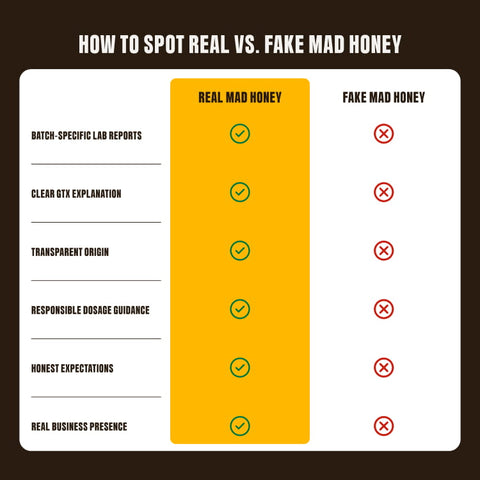
Each batch of Real Mad Honey comes with a lab report you can look up online.
Final Thoughts
So, does honey go off? Rarely, as long as you keep it sealed, dry, and in the cupboard. Its low water content and natural acidity are the reason why a well-kept jar can stay safe to eat long after the date on the label.
The best-before date is a guide to quality, not a deadline. A jar that has darkened slightly, lost a little of its floral aroma, or turned solid is usually still perfectly good. Crystallisation in particular catches a lot of people out, but it's simply the glucose in the honey doing what it naturally does, especially in a cool kitchen or with a high-glucose honey.
The one thing to watch for is moisture. A wet spoon or a lid that hasn't been closed properly can let water in, and that's when natural yeasts can start to ferment the honey. If you notice foam, bubbles, or a sour smell, it's time for a new jar.
Look after your ordinary honey and mad honey with a few simple habits, keep them in the cupboard and out of the fridge, and they will outlast most of what else is in your kitchen.