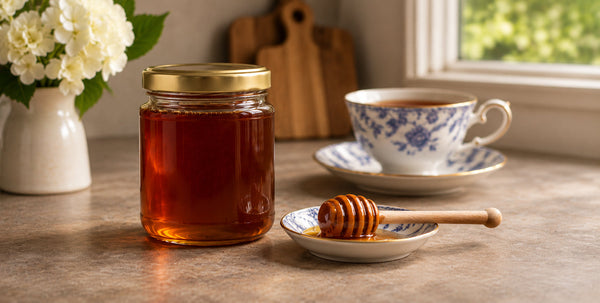
- Add mad honey to tea only once the mug has cooled below 40 °C, so its flavour and aroma aren't lost to freshly boiled water.
- Its dark, earthy, slightly bitter taste suits strong black teas like builder's tea and Assam better than delicate brews.
- Use mad honey in one mug and sweeten any others with everyday honey or sugar, since it's taken in very small amounts.
- In small amounts, people commonly report feeling relaxed and warm, so an evening mug at home suits it best.
The UK drinks around 100 million cups of tea a day, and plenty of them are sweetened. More people are swapping sugar for honey, and for some, that honey is mad honey: a dark, raw honey from the cliffs of Nepal with a taste and reputation all of its own. Putting honey in tea sounds simple enough, but mad honey comes with a few questions that a spoonful of clover honey doesn't.
Does a freshly boiled kettle ruin it? Does it work in a milky builder's tea, or only in something lighter? And how much should actually go in the cup? This guide answers all of that, with a focus on Britain’s most popular tea.
Can You Put Mad Honey in Tea?
Yes, mad honey works well in tea, as long as you add it at the right moment. Let your tea cool below 40 °C before stirring it in, because freshly boiled water dulls the flavour and aroma of raw honey. The grayanotoxins in mad honey are much more heat-stable than its aroma, so a hotter cup isn’t thought to make it any milder. Stick to the small amount recommended on the jar, use it in one cup, not every cup of the day, and choose a strong black tea that stands up to its earthy, bitter taste. In small amounts, people commonly report feeling relaxed and warm, so it’s best enjoyed at home with nothing else planned.
Does Hot Water Ruin Mad Honey?
Hot water doesn't make mad honey unsafe, but it does change what you get from it. Mad honey is a raw honey, which means it hasn't been heated or finely filtered on its way to the jar. That keeps its full aroma and the natural enzymes that bees add while making honey. Pour it straight into a mug of freshly boiled tea, and much of that is lost.
Freshly Boiled Kettle vs a Cooled Cup
A kettle that's just clicked off is close to 100 °C, and tea brewed with it starts almost as hot. At that temperature, the more delicate aromas in honey break down quickly, and its natural enzymes stop working. The honey still sweetens the tea, but you'll taste less of what makes mad honey interesting in the first place: its woody, earthy depth and long, bitter finish.
That's why the usual advice for any raw honey is to add it only once your drink has cooled below 40 °C. Mad honey is no different. Treat it more like a garnish you add at the end and less like sugar you stir in straight away.
How Long to Let Your Tea Cool
40 °C is cooler than most people drink their tea. A fresh cup usually sits somewhere around 60 to 70 °C when you take your first sip, so a cup below 40 °C is closer to lukewarm. In practice, there are a few ways to make this work:
- Let it stand: Leave your tea for 10 to 15 minutes, or until it feels warm but no longer hot on your lips, then stir in the mad honey.
- Add milk first: A splash of cold milk takes the temperature down quickly, which is one reason builder's tea pairs so well with mad honey.
- Use a smaller cup: A small cup or a teacup cools much faster than a big mug.
- Check it: If you want to be precise, use a kitchen thermometer.
If you prefer your tea piping hot, you can also take your mad honey straight from the spoon alongside it.
How Mad Honey Tastes in Tea Compared With Everyday Honey
Most honey in British cupboards is light and sweet: clover, acacia, or a supermarket blend. Stir a spoonful into tea, and it simply makes the cup sweeter, with a gentle floral note in the background.
Mad honey is a different kind of ingredient. Nepali mad honey is dark amber, thick, and noticeably less sweet than everyday honey. Its flavour is earthy and woody, with a bitter finish that lingers on the tongue. In tea, that means it adds depth more than sweetness. A cup sweetened with mad honey tastes richer and slightly smoky, a bit like adding a dark muscovado sugar instead of white.
Because it's thick and often crystallised, it also takes a little more stirring to dissolve. Give it a good stir and check the bottom of the cup, so it doesn't sit there as a layer.
Mad Honey in Builder's Tea
Builder's tea is the classic British brew: strong black tea, usually made with a robust blend based on Assam or Kenyan leaves, brewed until it's deep orange-brown and finished with a good splash of milk. It's traditionally sweetened, often generously, which makes it a natural place to try mad honey.
The strong, malty taste of builder's tea stands up well to mad honey's bitterness. Where a light honey might disappear, mad honey's earthy notes blend into the tea and give it a richer, rounder finish. The milk softens the bitter edge, so even people who find mad honey strong on its own often enjoy it in a milky brew.
There's a practical bonus, too. Adding milk cools the tea down, which brings it closer to the right temperature for honey. Brew your tea, add the milk, let it stand for a few minutes, then stir in the mad honey.
Because builder's tea is often the first drink of the day, it's worth thinking about timing. A mid-morning or afternoon cup at home, on a day when you don't need to drive or go to work, suits mad honey far better than a rushed brew before you leave the house.
Mad Honey in Earl Grey
Earl Grey is black tea flavoured with oil of bergamot, a citrus fruit that gives it its distinctive perfumed, floral taste. It's lighter and more fragrant than builder's tea, and many people drink it without milk or with a slice of lemon.
Mad honey and Earl Grey are a more surprising match. The bergamot's bright, citrusy perfume sits on top, while mad honey's earthy depth adds a darker base underneath. Some people love the contrast. Others find that mad honey's bitterness competes with the delicate bergamot, especially in a weaker brew.
If you'd like to try it, a few tips help:
- Brew it a little stronger than usual, so the tea has enough body to balance the honey.
- Start with less honey than you'd use in builder's tea, and taste before adding more.
- Try it with a splash of milk, which smooths both the bergamot and the honey's bitter finish.
If Earl Grey is your everyday tea and you find the combination too busy, keep your mad honey for a stronger brew, and use a light, floral everyday honey instead.
Mad Honey for Afternoon Tea
Afternoon tea is one of Britain's best-loved food traditions, said to have started in the 1840s with Anna, Duchess of Bedford, who wanted something to eat between lunch and a late dinner.
The teas most often poured at afternoon tea are Assam, a malty, full-bodied black tea, and Darjeeling, a lighter, more fragrant tea from the Himalayan foothills of India. Assam is the easier partner for mad honey. Its strength and maltiness match the honey's earthy depth, with or without milk. Darjeeling is more delicate, so a small amount of mad honey can overpower it.
Mad honey also has a place on the afternoon tea table itself. A small spoonful drizzled over a warm, buttered scone or served alongside cheese makes an unusual addition. Just remember that the honey in your tea and on your scone count towards the same small amount.
Because afternoon tea is a relaxed, unhurried occasion, it suits mad honey well. Many people find that's when they enjoy it most: at home, on a weekend, with nothing else on the schedule.

Mad Honey in Herbal Teas
Not everyone wants caffeine, especially later in the day, and mad honey also works in herbal infusions. Rooibos, with its naturally sweet, nutty taste, pairs well with mad honey's earthiness. Chamomile's gentle, apple-like flavour works with a small amount, though the honey's bitterness can dominate. Peppermint is a bolder pairing, and the cool mint and dark honey don't suit everyone.
The same rule applies to herbal teas: let them cool below 40 °C before adding the honey.
| Tea | How it pairs with mad honey | Milk? |
|---|---|---|
| Builder's tea | Very well. Strong, malty tea balances the bitterness | Yes |
| Assam | Very well. Full body matches the earthy depth | Optional |
| Earl Grey | Mixed. Brew it strong and use less honey | Optional |
| Darjeeling | Light touch only. Easy to overpower | No |
| Rooibos | Well. Naturally sweet and nutty | Optional |
| Chamomile | In small amounts. Gentle flavour | No |
| Peppermint | Divides opinion. Bold contrast | No |
Mad Honey in Tea With Milk vs Lemon
With milk, mad honey becomes softer and rounder. The milk takes the edge off its bitterness and brings out a caramel-like warmth, which is why it works so well in builder's tea and Assam. It's the easiest way to try mad honey in tea for the first time.
With lemon, the result is brighter and sharper. Lemon's acidity cuts through the honey's sweetness and lifts its flavour, which can work nicely in a stronger black tea without milk. The bitterness of mad honey comes through more clearly, though, so it's a combination for people who already enjoy its taste.
How Much Mad Honey to Add to Your Tea
Mad honey isn't a sugar substitute in the usual sense. It's taken in small amounts, so it's best to measure it, not spoon it in by eye. Follow our dosage guidance, and use a level measuring spoon to avoid taking too much mad honey.
Many people in the UK drink several cups of tea a day, and this is where it's easy to go wrong. Mad honey belongs in one cup, not every cup. Sweeten your other brews with everyday honey or sugar, and don't top up a later cup with more mad honey because you've finished the first.
There's a good reason for this. Mad honey contains naturally occurring grayanotoxins, and the amount varies from batch to batch.
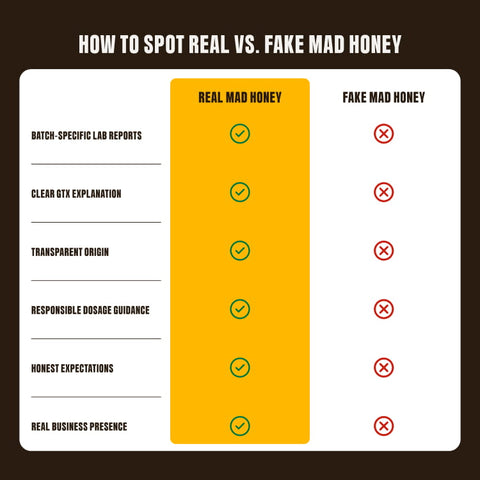
Each batch of Real Mad Honey comes with a lab report you can look up online, showing its grayanotoxin content. Taking more than the recommended amount doesn't make the experience better, and it can make you feel unwell.
What to Expect From Mad Honey in a Cup of Tea
The effects of mad honey are part of why people try it, and they can be felt in tea just as they can from a spoon. In small amounts, people commonly report a sense of relaxation, a gentle warmth spreading through the body, and a slightly light-headed, mellow mood. These are usually said to start within about an hour and fade over a few hours, though they vary with the honey, the amount, and the person.
That's why a cup of tea with mad honey suits a quiet evening or a lazy weekend afternoon much better than a morning brew before work. Drink it at home, with nothing else planned, and don't drink alcohol or drive afterwards.
Who Shouldn't Take Mad Honey in Tea
Mad honey in tea is still mad honey, so the same restrictions apply. Don't take it if you:
- have a heart condition or low blood pressure
- take medication that affects your heart rate, blood pressure, or nervous system
- are pregnant or breastfeeding
- are under 18
If you have any other health condition or take regular medication, talk to your doctor before trying it.
If you feel unwell after taking mad honey, call NHS 111 for advice. If symptoms are severe, such as fainting, chest pain, or a very slow heartbeat, call an ambulance and tell them what you've taken and how much.
Final Thoughts
Mad honey and a proper British cuppa can be a good match, as long as you take a little care. Let the tea cool below 40 °C before adding the honey, so you keep its earthy, woody flavour. Choose a strong brew like builder's tea or Assam, where its bitterness has something to stand up to, and add a splash of milk if you'd like it softer. Keep it to one measured cup, enjoy it at home, and save the rest of the day's tea for everyday honey or sugar.