Mad honey is legal in the United Kingdom. It can be bought, owned, brought into the country, and consumed without restriction; no licence or permission applies, and grayanotoxin appears on no controlled substance schedule.
The legal question is therefore the easy part. What takes more attention is that legal availability establishes nothing about what a particular jar contains, and that distinction matters considerably more to a buyer than the law does.
What UK Law Says About Mad Honey
UK law treats mad honey as a food, which is the whole of it. That places it alongside other imported speciality foods rather than in any restricted category, and it means food safety and labelling rules apply rather than anything drawn from drug legislation.
The classification follows from what mad honey is. Grayanotoxins occur naturally in the nectar of certain rhododendron species and pass into the honey unchanged during hive processing, which makes them a naturally occurring compound in a food rather than an additive or a synthesised substance. What mad honey is covers the compounds involved in more detail.
For a buyer, that classification carries no obligations at all. Food law applies to businesses handling and selling food rather than to individuals purchasing it, so no permit, declaration or registration is involved, and a purchase is an ordinary consumer transaction.
This is worth stating plainly because mad honey is often discussed as though its position were uncertain. It is not. The uncertainty attaches to what is in the jar rather than to whether owning it is permitted.
Why Mad Honey Is Not a Controlled Substance
Controlled substance law works from lists rather than from effects, and grayanotoxin does not appear on any of them. The Misuse of Drugs Act 1971 schedules specific compounds, and nothing in mad honey is among them. That remains true regardless of what the honey does, since scheduling is a legislative decision about named substances rather than a general test applied to anything with an effect.
The Psychoactive Substances Act 2016 is the other statute people reach for, and it does not apply either. Food is explicitly excluded from its scope, and mad honey is a food, which places it outside the Act regardless of how its effects are described.
The comparison people make is usually to substances that are scheduled, and it does not hold. Those are controlled because they appear on a list, while mad honey has simply never been listed, which is a meaningfully different position from having found a gap in the law.
Is It Legal to Buy Mad Honey Online?
Buying online is entirely legal and is how nearly all mad honey in the UK is sold, since it is rarely stocked in general retail. Purchasing from a UK-based seller is an ordinary domestic transaction. Consumer rights apply as they would to any other food purchase, returns follow UK rules, and prices include tax rather than attracting charges on delivery.
Buying from an overseas seller is equally legal, though it introduces practical differences rather than legal ones. Delivery takes longer, consumer protection is harder to enforce across a border, and any problem with an order becomes considerably more difficult to resolve.
Marketplaces occasionally remove mad honey listings under their own policies, which reflects platform rules rather than law. A seller operating from their own site is not subject to those policies, and the difference is commercial rather than legal.

Is It Legal to Bring Mad Honey Into the UK?
Bringing mad honey into the country is legal, and personal quantities are treated as any other food would be. Three situations come up, and they differ in practice rather than in law.
Travelling Back With It
Anyone returning from Nepal or Turkey with a jar or two is carrying food rather than anything requiring declaration on drug grounds. Standard rules on bringing food into the UK apply, and honey from outside the EU carries quantity limits worth checking before travelling with a large amount.
Ordering From Abroad
Personal-scale shipments generally clear without difficulty. Anything held up is usually held on food import or labelling grounds rather than for any reason connected to the compounds involved, and the practical cost is a longer wait rather than a legal problem.
Buying From UK Stock
This removes the question entirely. The import work has been done before the jar reaches a domestic warehouse, so what remains is a domestic purchase with UK consumer protection attached and no border to cross.
Commercial quantities sit outside all three. Importing food for resale carries registration, labelling and traceability obligations, and those fall on the business rather than on anyone buying for themselves.
Do You Need to Be Over 18 to Buy Mad Honey?
No age restriction applies to mad honey in UK law, since food is not age-restricted the way alcohol and tobacco are. That is the legal position rather than the sensible one. Mad honey contains compounds that affect blood pressure and heart rate, and responsible sellers apply their own eighteen-plus policy regardless of what the law requires, which reflects the product rather than any obligation.
Anyone buying for someone else should apply the same judgement they would to anything affecting blood pressure. This is not a product for children, and honey generally is not given to infants under twelve months.
Does Mad Honey Show Up on a Drug Test?
No. Standard drug screening looks for specific scheduled substances, and grayanotoxin is not among them. The panels used in workplace and roadside testing target a defined list, typically covering cannabis, opiates, cocaine, amphetamines, and benzodiazepines. Nothing in mad honey resembles any of them chemically, and no standard test is designed to detect it.
Specialist analysis can identify grayanotoxins where there is a reason to look, which is how clinical cases are confirmed. That requires a laboratory specifically testing for them rather than any routine panel, and it does not happen incidentally.
The practical answer is that mad honey does not appear on any test someone is likely to encounter. Anyone subject to testing under specific professional rules should check those rules rather than rely on a general article.

What Legal Status Does Not Guarantee
Legality settles one question and leaves the useful ones open, which is why it makes a poor basis for a purchase. What it confirms is that buying, owning and consuming mad honey carries no legal risk. There is no offence, no grey area and no reason for caution on legal grounds.
What it says nothing about is the jar. Grayanotoxin concentration, whether the honey has been tested, whether it came from where the label claims, and whether it contains any meaningful active compound at all are all outside what legality addresses. Analyses of samples sold as mad honey have found grayanotoxin absent in a substantial proportion of them, and every one of those samples was entirely legal.
The gap between legal and verified is where a buying decision actually sits. A seller that has tested what it imports can show the figures, while one that has not may be selling something perfectly lawful and largely inert, and neither situation involves breaking any rule.

Buying From a Compliant UK Seller
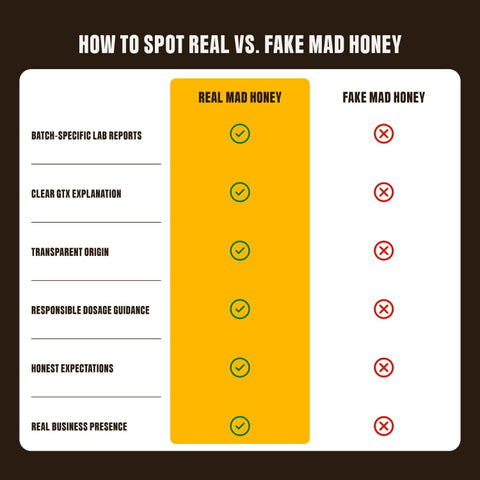
Four things distinguish a seller doing the work from one relying on the product being legal, and none of them requires taking anything on trust:
-
Published batch testing. Independent analysis showing grayanotoxin content for the specific batch on sale, rather than a single report reused across harvests.
-
Named sourcing. A stated harvesting region and community rather than vague terms such as Himalayan or wild.
-
Conservative serving guidance. Instructions built around small amounts, which indicate a seller treating the product as a food with an active compound in it.
-
A real UK business. Contact details, stated return terms and prices including tax, which give consumer protection something to attach to.
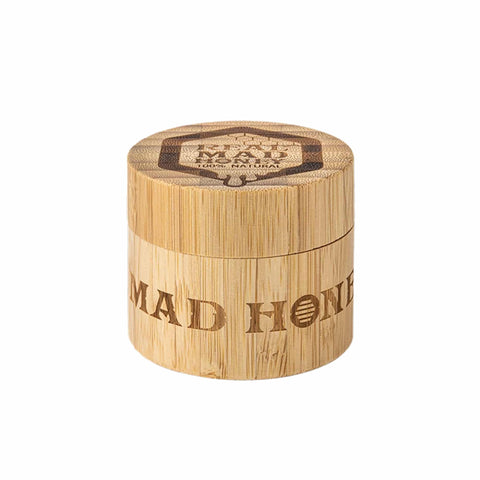
Real Mad Honey holds UK stock and works to that standard. The honey is wild-harvested in the Himalayas through established Nepalese honey-hunting communities, and where it comes from is stated specifically rather than described in general terms.
Every batch is analysed by an independent laboratory before sale, with the report published against the batch on the shelf, and harvests falling outside the accepted standards are rejected rather than blended into the next. Prices include tax and a 60-day policy covers sealed returns.
Bottom Line: The Legal Position in Short
Mad honey is legal throughout the UK. It is not a controlled substance; the Psychoactive Substances Act does not apply to food, no age restriction exists in law, and it does not appear on standard drug tests. Buying it online, ordering it from abroad, and carrying it back from Nepal or Turkey are all permitted, with the only practical differences being delivery times and how easily a problem can be resolved rather than anything legal.
For anyone deciding what to buy, the legal question is settled, and the useful one is not. Whether a jar contains what it claims depends entirely on whether the seller has tested it, and a published batch report is the simplest way to tell the difference between honey that is legal and honey that is both legal and worth the money.