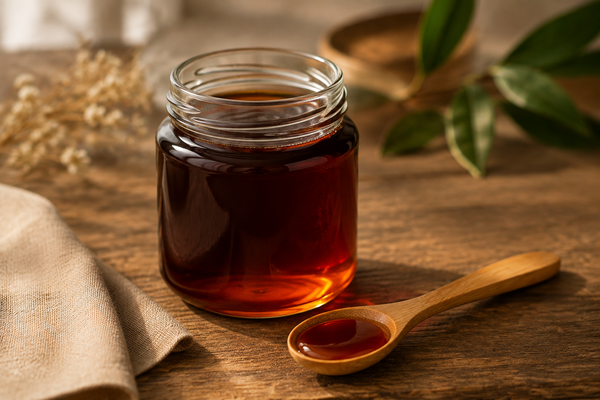
Mad honey can be bought in the UK without difficulty. It is treated as a food rather than a controlled substance; no licence or permission is required, and several sellers hold stock domestically so a jar arrives on ordinary next-day terms rather than through an import process.
What takes more thought is which jar. Grayanotoxin content varies considerably between harvests; a good proportion of what is sold contains very little of it, and the difference between a worthwhile purchase and a disappointing one comes down to what a seller can establish before an order is placed.
Can You Buy Mad Honey in the UK?
Yes, and buying it involves nothing unusual. Mad honey is sold online by specialist retailers, appears in some independent shops, and can be ordered and delivered on the same terms as any other speciality food. No age verification is written into law for mad honey specifically, though responsible sellers apply their own, and nothing about the purchase requires documentation, declaration, or a permit of any kind.
The one practical difference from an ordinary grocery purchase is availability. Mad honey comes from a small number of seasonal harvests, so stock runs out between collections and a particular batch sells through rather than being restocked indefinitely, which is a feature of the product rather than a problem with the seller.
Is Mad Honey Legal in the UK?
Mad honey is legal to buy, own and consume in the United Kingdom. Grayanotoxin does not appear on any controlled substance schedule, and it is not named in the Psychoactive Substances Act 2016, which was drafted with synthetic compounds in mind rather than naturally occurring ones in food.
The Food Standards Agency treats mad honey as a food, which places it under food safety and labelling law rather than drug law. That framework applies to businesses selling it rather than to individuals buying it, so a consumer purchasing a jar carries no legal obligation and takes no legal risk.
What food law does require is accuracy. Sellers must label honestly, must not present a product as a medicine, and must not market it for psychoactive effects, all of which are ordinary obligations for anyone selling food in Britain.
The broader question of what mad honey is sits behind that classification, since the compounds involved occur naturally in rhododendron nectar rather than being added to the honey afterwards.
Where to Buy Mad Honey in the UK
Specialist online retailers account for most sales, since mad honey is rarely stocked by supermarkets or general health shops and the sellers who handle it tend to do so exclusively. Buying from a UK-based seller is the simplest route. Stock is already in the country, so delivery runs on domestic timescales, prices include tax, and returns follow UK consumer rules rather than an international returns process.
Ordering from abroad is possible and introduces the customs question covered further down. Most personal-scale shipments clear without incident, though the delivery timeline is longer and any problem with an order is harder to resolve across a border.

What to Check Before Buying
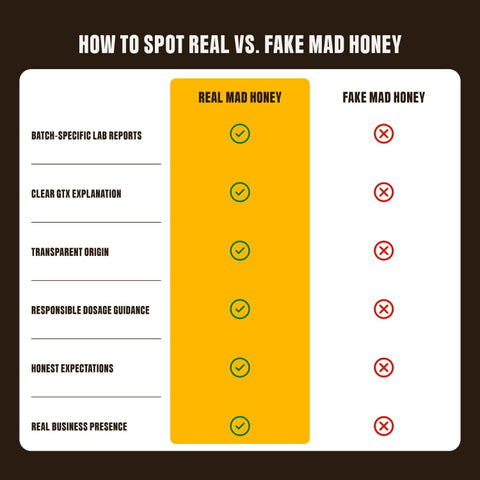
Grayanotoxin content is invisible, so everything worth knowing comes from what the seller publishes rather than from the jar. Five things are worth confirming:
-
Published batch testing. Independent analysis showing GTX I and GTX III content for the specific batch on sale, rather than a single old report reused indefinitely.
-
A named harvesting region. Nepal or Turkey with a stated area, rather than vague terms such as Himalayan or wild.
-
Conservative serving guidance. Instructions built around small amounts and waiting, since a seller promising intensity is selling the story rather than the contents.
-
Honest acknowledgement of variation. Wild seasonal harvests differ, and any seller presenting every jar as identical is describing something that has been processed.
-
A real business behind it. A UK address or contact details, stated return terms and accessible customer service.
Price is a weaker signal than it appears. Genuine mad honey is never cheap, though an expensive jar with no testing information is no better established than a cheap one, so the figures matter less than what accompanies them.
How Much Mad Honey Costs in the UK
Mad honey sits at the higher end of the honey market, and the per-gram cost falls steadily as jar size increases, which is worth knowing before comparing headline prices between sellers.
| Size | Typical UK price | Per gram |
|---|---|---|
| 50g | Around £37 | £0.75 |
| 100g | Around £57 | £0.58 |
| 150g | Around £77 | £0.52 |
| 250g | Around £120 | £0.48 |
| 500g | Around £190 | £0.38 |
Those figures look steep against supermarket honey and less so against other speciality honeys, since single-origin manuka and comparable products command high prices without approaching the same harvesting difficulty.
Serving size changes the arithmetic more than the headline figure suggests. Mad honey is taken a teaspoon at a time rather than spread on toast, so a 50g jar holds around ten servings and a 500g jar around a hundred, which brings the cost per serving considerably closer to everyday territory.
Prices move with harvests and with promotions, so the figures above are indicative rather than fixed.
Buying From Abroad and What Happens at Customs
Ordering directly from Nepal or Turkey is legal and generally straightforward for personal quantities, though it introduces variables that a domestic purchase does not. Personal-scale shipments of one or two jars typically clear without difficulty. What can hold up a parcel is food import documentation or labelling rather than anything drug-related, since mad honey enters the country as a food and is assessed on that basis.
Commercial quantities are a different matter, since importing food for resale carries registration, labelling and traceability obligations that fall on the business rather than the individual.
Buying from a seller already holding UK stock avoids the question entirely. The import work has been done before the jar reaches a domestic warehouse, and the transaction becomes an ordinary domestic purchase with UK consumer protection attached.
How Much to Take and How to Store It
A teaspoon is the standard serving, and it is worth starting below that with a new jar rather than at it, since batches differ and a serving calibrated to one harvest may behave differently in the next. Effects build over twenty to forty minutes rather than arriving at once, which catches out people expecting something immediate. Waiting a full hour before considering more is the single most useful habit for anyone new to it, since taking a second serving during the build accounts for most difficult experiences.
Timing suits the evening for most people, since the effect is grounding rather than stimulating. Taking it on a light stomach produces a quicker, cleaner onset, while a substantial meal beforehand delays and flattens it.
Storage is undemanding. A sealed jar kept at room temperature away from direct sunlight holds its character for years; refrigeration is unnecessary and encourages crystallisation, and a crystallised jar is neither spoiled nor weaker.
Anyone pregnant, anyone with a heart condition or low blood pressure, and anyone taking blood pressure medication should speak to a doctor before trying mad honey.

Choosing a UK Seller
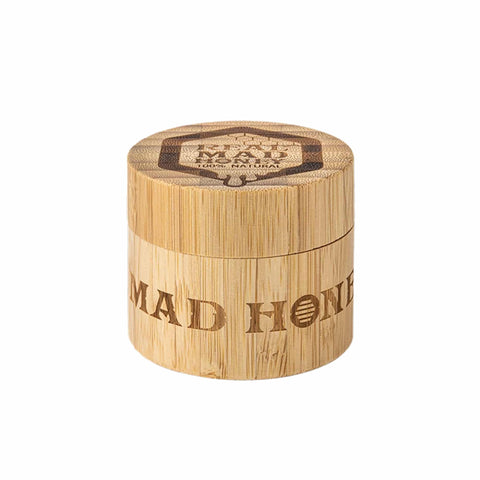
The seller matters more than the origin, since a named region with no testing behind it establishes very little about a specific jar. Real Mad Honey holds UK stock and publishes analysis for every batch it sells. The honey is wild-harvested in the Himalayas through established Nepalese honey-hunting communities, and where it comes from is stated specifically rather than described in general terms.
Every batch is analysed by an independent laboratory before sale, with the report published against the batch on the shelf, and harvests falling outside the accepted standards are rejected rather than blended into the next. Jars run from 50g to 500g, prices include tax, and a 60-day policy covers sealed returns and money-back requests.
Conclusion: What UK Buyers Need to Know
Buying mad honey in the UK is straightforward. It is legal, it is treated as a food, no permission is required, and domestic sellers hold stock so a jar arrives on ordinary terms rather than through customs. The decision worth taking time over is which seller. Grayanotoxin content varies between harvests and cannot be judged by colour, price or origin claims, so published batch analysis is the only thing separating a jar that does what it should from one that does very little.
For a first purchase, a small jar from a seller publishing figures is the sensible route. It establishes how that particular batch behaves at a conservative serving, and it costs considerably less than discovering the same thing through a larger jar bought on a description alone.