The best mad honey is not necessarily the darkest, rarest, or strongest jar available. A better choice combines traceable sourcing, relevant batch testing, and a flavour profile that suits the buyer, alongside enough information to understand where the honey was harvested, which compounds were measured, and how the current batch differs from previous ones.
That distinction matters because mad honey is a seasonal natural product rather than a standardised formula. Rhododendron species, surrounding vegetation, weather and harvest timing all influence its composition, so two authentic jars can look, taste and test differently without either one being inferior.
What Makes the Best Mad Honey?
The best mad honey is judged as a complete product rather than by one dramatic claim. Potency matters, but it sits alongside authenticity, traceability, flavour, handling and transparency, and a powerful jar with no clear origin or laboratory information is harder to trust than a documented batch with realistic guidance.
| Quality factor | What to look for | What it tells you |
|---|---|---|
| Botanical source | Honey connected to recognised rhododendron-growing regions | Whether the stated origin is consistent with mad honey production |
| Traceable harvest | Country, region and batch information | Whether the jar can be linked to a particular supply |
| Grayanotoxin testing | Results for relevant compounds such as GTX I and GTX III | What was measured in the analysed batch |
| Purity information | Clear ingredients and appropriate quality analysis | Whether the product is presented as genuine honey rather than an unidentified blend |
| Honest product description | Realistic language about variation, flavour and expected use | Whether the seller recognises that wild honey is not identical from batch to batch |
| Storage guidance | Clear instructions for protecting the honey after opening | Whether the product can retain its quality over time |
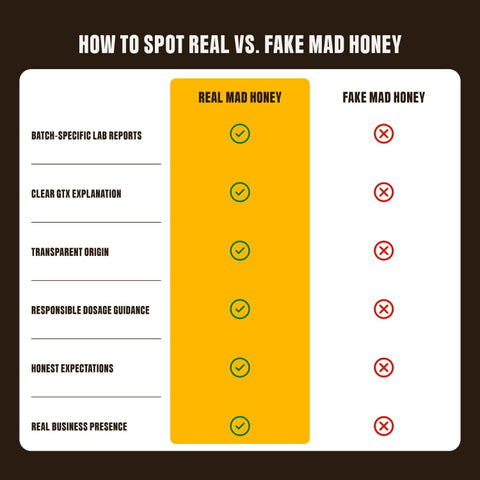
No single row proves quality by itself. A strong selection combines several of these signals and makes them available before purchase.
The word purity also needs context. A grayanotoxin report shows whether particular GTX compounds were detected, but it does not automatically rule out every type of honey adulteration. Questions about added syrups, complete botanical origin, and general composition may require different forms of analysis, and modern honey authentication often relies on several complementary methods rather than one universal test.
How Potency Varies Between Jars
Two jars collected from the same region can contain different concentrations of grayanotoxins, and the flower species available to the bees is one reason why. Not every rhododendron contains the same combination or concentration of grayananes, and not every colony relies on rhododendron nectar to the same extent, since bees also visit chestnut trees, herbs and other local flowers during the same period.
Seasonal conditions add another layer. Changes in rainfall, temperature and flowering intensity alter nectar availability from one harvest to the next. Research on Black Sea mad honey has found that its properties vary by production year, while newer work has measured substantial differences in GTX III concentrations across individual honey samples.
Harvest timing matters as well. Honey removed after a concentrated rhododendron flowering period can have a different profile from honey left in the hive while other plants begin to bloom.
Potency is therefore best understood at batch level rather than as a permanent quality attached to a country or a brand. Claims about the "strongest" jar tell a buyer very little unless they are supported by current measurements connected to the honey actually being sold, and a higher reading does not automatically make a batch better. The best product is one whose characteristics are clearly documented, responsibly presented, and suited to the buyer's preferences.
Why Sourcing Matters
Sourcing describes more than the country printed on the label, since it covers the whole path from the flowering landscape to the finished jar. A credible supply connects the honey to a recognisable harvesting region and explains who collects it, whether that involves wild cliff colonies, local honey hunters, traditional beekeepers or managed colonies positioned near seasonal rhododendron growth.
Traceability becomes especially important when a product is rare, seasonal and difficult to verify independently. A detailed mountain story counts for little if the seller cannot explain which harvest the available jar came from.
Good sourcing information also distinguishes current supply from general tradition. A region may have produced mad honey for generations, but that history does not establish the origin of every jar advertised online.
The condition of the honey after harvesting matters too. Excessive heating and prolonged poor storage change honey's chemical and sensory characteristics, including colour and flavour, so handling practices form part of quality even when the original harvest is genuine. For a deeper look at how the flowers, landscape and season influence a harvest, the rhododendron behind mad honey covers the botanical side in detail.

How Mad Honey Is Tested
Testing mad honey answers several different questions, and the method should match the claim being made. For potency, laboratories commonly analyse grayanotoxins using liquid chromatography combined with mass spectrometry, and LC-MS/MS and high-resolution LC-MS techniques have both been used to identify or quantify GTX compounds in honey, including GTX I and GTX III.
A useful report shows which sample was analysed, when the analysis took place, which compounds were included and what concentrations were detected. The sample reference should also be traceable to the batch currently on sale.
Testing does not make wild honey identical. It records what was detected in the submitted sample and allows one batch to be assessed separately from another.
Botanical origin can be investigated through pollen analysis, since rhododendron pollen in honey supports the connection to the relevant plants, and recent research found a positive relationship between rhododendron pollen density and measured GTX III concentration. Pollen alone, however, does not provide a complete measurement of potency, and purity may require separate analysis again, since a report covering only GTX I and GTX III does not establish whether added sugars are absent. The most transparent sellers explain exactly what their reports cover instead of using a laboratory logo as a general promise of quality. For more detail on the compounds being measured, this explanation of what mad honey is covers them in context.

How Flavour, Colour and Texture Can Differ
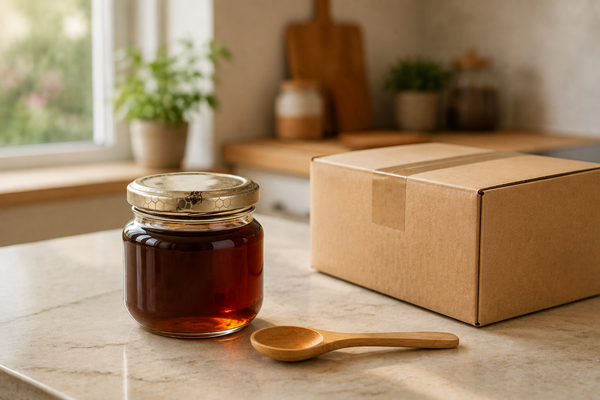
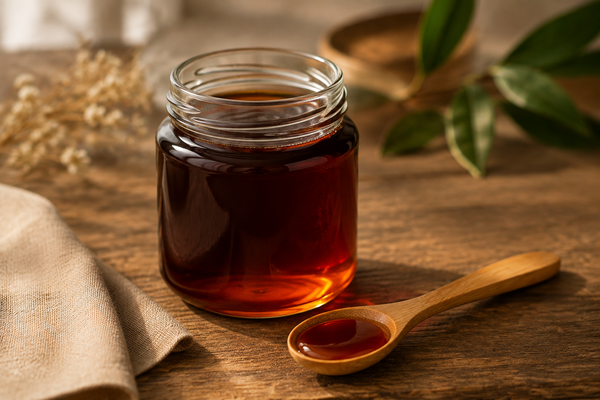
Mad honey has no single fixed appearance or taste. Some batches are deep amber or brown while others are lighter and more golden, and flavour ranges from strongly earthy and botanical to smoother and more familiar, sometimes with noticeable bitterness or a slight catch at the back of the throat.
These qualities are shaped by the nectar sources available to the bees, the region, moisture content, season, storage and the age of the honey. Changes in colour or texture are therefore not automatically signs that a product is false or poor quality.
Crystallisation is a normal feature of many natural honeys. It occurs when sugars form crystals over time and is affected by temperature and the glucose-to-water balance. Refrigeration accelerates crystallisation, but the change does not mean the honey has spoiled.
Sensory details still have value, since they allow regional styles to be compared and give each harvest its character. What they cannot do is provide an exact chemical reading. Darkness is not a direct measure of potency, bitterness does not replace a laboratory report, and thickness establishes nothing about origin on its own. The best jar is one whose sensory character is described honestly, without presenting appearance or taste as scientific proof.
How to Store Mad Honey After Opening
Proper storage protects the honey's flavour, texture and overall quality, and the requirements are simple. The jar is best kept tightly closed at room temperature in a cool, dry, dark place, and a cupboard away from the oven, radiator and direct sunlight suits it better than an exposed kitchen shelf.
Refrigeration is unnecessary and encourages faster crystallisation. Honey that has crystallised remains perfectly usable, and gentle warming softens the texture, though strong or prolonged heat is worth avoiding because heating alters some of honey's natural compounds and sensory qualities.
A clean, dry spoon each time is the other essential. Introducing water or food residue into the jar affects its condition and shortens the period in which it stays at its best.
Honey is naturally stable, but the best-before information supplied with the product is still worth following. That date indicates the period of optimal flavour and quality rather than the point at which the honey becomes unusable.
Which Jar Size to Start With
With one thing settled, meaning a seller who documents what they sell, the remaining decision is quantity. It matters more than it sounds, because the per-gram cost falls sharply as jar size rises and because a single jar tends to last far longer than its weight suggests when the honey is taken a teaspoon at a time.
A smaller jar is the sensible first purchase. It allows the flavour, the character of a particular batch and the overall effect to be judged before committing further, and while the per-gram cost is highest at that size, the total outlay is lowest. Anyone unsure whether they will take to the taste, which divides opinion more than the effects do, loses very little by starting there.
A larger jar is the better arithmetic for anyone already familiar with it. Cost per serving improves considerably, and the character of one batch stays consistent across months of use rather than shifting with each new purchase, which is worth more than it first appears with a product that varies naturally between harvests.
One further check on the opening clause. "With one thing settled, meaning a seller who documents what they sell" refers back to the testing section, but the section immediately before this one is storage, so the reference reaches back two sections. It reads acceptably, though "With the seller question settled" would be tighter and less dependent on the reader holding that thread.

Choosing the Best Mad Honey
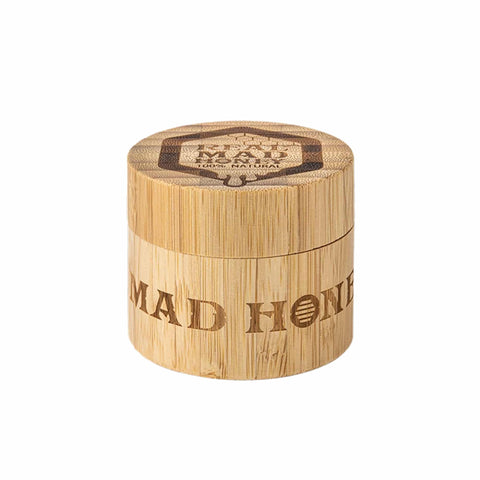
Applying that to a specific purchase means finding a seller whose information supports the choice. Real Mad Honey sources wild Himalayan honey through established Nepalese honey-hunting communities, harvested above 3,500 metres during the short seasonal windows when the rhododendrons bloom, and every batch is analysed by Eurofins before it goes on sale.
The honey itself is the darker, bolder, earthier style most associated with high-altitude Himalayan harvests, and the flavour carries the earthy bitterness and faint throat catch that mark a genuine grayanotoxin profile. Jar sizes run from 50g through to 500g, which covers both the cautious first purchase and the larger jar that makes better arithmetic for regular use.
What is unusual is what happens to batches that fall short. Anything outside the accepted standards or showing inconsistent results is rejected rather than blended away or sold at a discount, which is the difference between a seller who tests to inform buyers and one who tests to reassure them. Storage guidance and conservative serving instructions ship alongside, and each harvest keeps its own character rather than being presented as identical to previous supply.
Takeaway: How to Find the Best Jar of Mad Honey
The best mad honey is the jar that combines clear evidence with the characteristics the buyer actually wants, and sourcing is where that assessment begins. A seller should identify the origin and explain how the honey reaches the finished product, and the laboratory information should then confirm that it relates to the batch currently available.
Origin and sensory descriptions are useful for choosing between regional profiles, provided they are not treated as guarantees of potency. Nepalese honey appeals to buyers looking for a darker, bolder style, while Turkish honey suits those who prefer something lighter and smoother.
Claims about extreme strength deserve the least attention of all. A trustworthy jar is traceable, appropriately tested, honestly described and supported by practical storage and serving information, and that combination matters more than colour, price or a dramatic label.